
Blog Posts

8 Things Successful People Do on Their Lunch-image

Do you consider yourself a successful person? We believe everyone possesses the ability to be successful. Reaching the heights of success can take time, though, it’s not always a hurdle jump away. Fortunately, you can shorten this journey through one simple step: making the best use of your lunch hour. If you’re like most people, you have five hours per week that you can use to reach your goals faster. Read on to discover how to make the best use of those five hours: 1. Leave the office This gives you a break from distractions and an opportunity to refresh yourself. If you simply sit at your desk for lunch every day, you can expect managers and coworkers to ask you to do more work.  By escaping the throws of office duties, you’re regenerating your brain, getting your blood flowing and allowing your focus to rest on things simpler and less stressful. So leave, scat, make like a bread truck. Just don’t forget to go back. What about those times when you simply have to stay at the office? There are ways to work around that requirement as well (see the next tip). 2. Do a weekly review Maintaining control and perspective over your life doesn’t have to be hard. That’s why successful people have mastered review habits. For example, you can review the past week’s sent emails during lunch to determine what follow up actions are needed. Alternately, you can review your calendar of appointments for the rest of the week. This can be applied to your personal schedule as well. Heck, it is lunch after all isn’t it? These practices put you back in command of both your work and personal time and keep your life on track. Tip: To get started with the weekly review, read  Why You Need A Weekly Review To Become More Productive . 3. Get exercise Successful people know that exercise is vital to maintaining mental focus and health. Successful people get exercise during lunch in several ways, such as going to a fitness class, going for a walk and even putting in a few quick push-ups. Exercise is also a great way to cope with  workplace stress . Some companies, like  HBO, even offer yoga classes on site ! Take the time to ask your HR department about the company’s wellness program–you don’t know what’s available until you ask. In accordance with tip #1, getting the blood flowing provides the mental and physical relief your mind & body needs to perform at its peak. 4. Build career assets Assets are resources that grow in value over time. Checklists are a resource that successful people regularly use to avoid mistakes and guarantee high quality (check out  Learn How To Build A Checklist In 6 Steps ). The time you invest to build a career asset will save you plenty of time in the future. Here are other career assets easy enough to build over your lunch hour: Standard Operating Procedures : a sequence of steps that explains how to do important parts of your job. These procedures can cover how to produce reports, your personal sales process and other aspects of your work. Career Portfolio : a collection of documents (e.g. performance reviews, copies of emails from happy clients, PowerPoint presentation templates) that prove all of your skills and accomplishments. Professional Contact List : write up a contact list (use a paper notebook or a spreadsheet to start with) of the 100 most important people in your career–include their name, title, company, phone number and email address. If you are laid off suddenly, you will need a copy of that information at home for reference.   5. Build relationships Breaking bread and sharing a meal with another person is one of the best ways to build a relationship. Successful people know that meeting somebody once at an event is just the start of building a relationship. The next step is to spend more time with that person. Lunch is a great way to develop a relationship because people tend to open up about their lives and go beyond business concerns. By delving into personal (but not  too  personal) information, you and your new contact feel comfortable with one another and trust each other enough to do business together. And remember, first impressions, body language and vocabulary are key! To learn more about networking and career advancement, read  9 Bulletproof Ways To Get Ahead in Your Career . 6. Eat for health, not entertainment What you eat for lunch has a significant impact on your results. That’s why successful people tend to avoid pasta and other carb-heavy meals at lunch, they make you lethargic and groggy. To improve your energy and keep moving, eat almonds, walnuts and other proteins. Foods high in protein fuel the brain. Relying on sugar to get you through the day is simply not effective—you’ll crash and burn by 2:30. In addition, consider avoiding foods with strong smells or sauces during the work week; spilling food on yourself during the work day is frustrating! Keep your eating for “entertainment”–desserts and the like–to the evenings and weekends. 7. Run personal errands Successful people understand the importance of staying focused at work. That’s why they avoid making personal phone calls during business hours as much as possible. However, we all know that life is full of pressures. For example, you may need to pick up prescriptions. One way to improve your productivity is to use a pharmacy nearby your office, so you can go there during your lunch break. To take this principle a step further, adapt Mike Hardy’s  time chunking  approach. You could designate the Friday lunch hour for personal errands and reserve Monday lunch hours for professional growth. Either way, incorporating a small portion of your personal life into your work day relieves some of the pressure in your home life, and it’s well worth it, however small. Tip: Learn how to cut down on the time needed to perform chores by reading  Hate Chores? Make Them Less Painful with These Tips . 8. Take a nap Successful people understand the value of being well-rested. Entrepreneur Michael Hyatt has explained  5 reasons you should take a nap every day . Putting in a 20-30 minute nap does a great deal to increase your productivity and mental clarity. Specifically, napping has been shown to improve heart health and improve efficiency. Not sure where to take a nap? Look around if your company has a wellness room or a quiet room. Such rooms may serve as a useful nap location! As an alternative, look for a quiet office or a meeting room (though you run the risk of being “caught” napping). Tip: Learn  How To Design The Perfect Nap , if you’re just getting started with the napping habit.

Read more


How to Build the Best Burger Ever-image

Who doesn’t love a good burger? There are a lot of joints that boast mouth-watering creations, and it’s great to be able to head down the street for one of your favorites. But have you ever wanted to take your favorite burger and make it your own? The good news is you don’t have to be a top-rated chef to build an amazing burger, you just need to understand the anatomy of one: The bun Must be buttered and toasted, first and foremost, no matter what type of bread you use. But you should definitely choose between brioche, Kaiser roll, pretzel or ciabatta. The meat Should be local. Organic or not is your choice, but fresh is best—just say no to frozen! Cook the beef to medium and nothing else. Sometimes I like my burger with a little char-taste, so I enjoy grilling. But occasionally I crave the greasy juiciness of cooking the patties on the stove. Aside from the beef, bacon is obviously a magical pairing, but I love adding some other types of meat like pulled pork, chicken, or crab. Vegetarian? No sweat. Black bean burgers have their own special taste that can really set your burger apart. To make your own, follow our favorite recipe  here. The cheese: Can be almost any type you conjure. Popular picks include American, Swiss, cheddar and provolone, but I like to get creative with unconventional choices like goat, brie, Gouda, cotjia and gorgonzola. If you want to get real sassy, pile two (or seven) different types on there. The toppings: Are where you’ll really stretch your culinary legs. I’ve had burgers from all over the country and for me it comes down to taste and texture. One of my favorites includes caramelized onions, bacon, pear glaze, avocado and arugula. Another favorite is smothered in peanut butter (don’t knock it till you try it!) I love mixing sweet and salty, but some folks prefer traditional burgers like the classic bacon cheeseburger. The best part of making your own at home is the freedom to customize, so grab the main ingredients, see what’s already in your fridge, and get innovative. Throw a “build your own burger” dinner party and have everyone bring a different kind of cheese or topping. Experiment with new tastes and you just might find your next must-have, mouth-watering sandwich!

Read more
Moving Tips-image

So many find moving to be stressful, but in our community we couldn’t be more excited to welcome new residents! Whether you’re a first-time renter or veteran, utilize the tips below to help make your move less stressful: 1. Use Your Friends If you have friends or family that live close by, enlist their help. This will save on the cost of movers since most relatives and friends accept food or drinks as compensation. In addition, these are the folks you can trust with your irreplaceable items. 2. Hire Movers If you don’t have friends or family close by, hiring movers might be the way to go. Although this will require monetary compensation, most movers come insured. Be sure to read the fine print on a moving contract to understand their hours, pay and, most importantly, if they offer everything that you will need. 3. Get Organized From grouping items together in boxes to having a labeling system, being organized during a move can cut stress down more than you think. At least group everything that you’ll need within the first day or two of moving into the same box so it is all easily accessible and you won’t have to dig for individual items in multiple boxes. 4. Pack Smart Packing up, unpacking and everything in between can be the main source of stress for many people. If you’re packing breakables, make sure that they are packed with packing paper or bubble wrap to ensure nothing gets broken. You could also consider packing your fragile items with clothing so it takes care of two things at once. Another helpful tip is to pack small amounts over the course of a week or two, instead of trying to pack up your entire life the night before a move. Although moving can be a daunting task, taking your time and making sure you’re organized in every way possible can make it better. Moving should be an exciting time, not one to worry about. What are some other tips you have that have helped make your move easier? Share your ideas so others can take advantage!

Read more
20 Money Saving Tips-image

These days, in our world of instant gratification, it's more important than ever to be able to stay focused on saving money any way you can. So to help you monitor your spending habits and cut expenses, here are 20 easy ways you can save every day—starting right now. How's that for instant gratification?   1. Make a weekly "money date."  Commit to sitting down with your money once a week for a money date. Then update your budget, review your accounts and track your progress against your financial goals. Like any relationship, if you want your financial life to improve, you must spend time with your money. 2. Plan out your meals for the week.  Taking a few hours every weekend to grocery shop and meal plan for the week will definitely save you money, as dining out is the No. 1 expense for most households. By eating at home, you save money that would otherwise be spent on tax and tip—and you usually save calories, too. 3. Cut out cable.  Gasp! Cut out TV?! Never! But with services like Hulu, Netflix and Amazon Prime, you can now watch your favorite TV shows and movies for a fraction of the cost of cable TV. 4. Switch to an exercise pass program.  If you love working out, an exercise pass program such as Class Pass is the way to go. By paying a membership fee of $99 per month, you are welcome at many of the best studios in your area. And classes—like cycling, yoga, Pilates, barre, strength training, boot camp, dance and more—are unlimited. This beats having to pay for each studio's monthly membership or individual class fee, which can add up to hundreds of dollars a month. 5. Host a potluck.  The more friends you have, the more money you spend on lunch dates, birthday parties and gifts. Switch it up and, instead of meeting over a fancy dinner, host a potluck and have everyone bring his or her favorite dish. 6. Leverage lodging rental websites.  Finding a place to stay while traveling is so convenient when you use a lodging rental website such as Airbnb, Travelmob or Housetrip. You can often find a place that has a kitchen (so you can cook meals at home to save money) at a rate that's comparable to hotels. You can even rent out your own place on sites such as Airbnb while you travel to make some extra cash to pay for your own travel expenses. It's a win-win scenario. 7. Make coffee at home.  This one's not my favorite, as I absolutely love going to coffee shops and drinking delicious organic coffee. However, spending $4 to $5 on coffee every day definitely adds up. So try my approach and allow yourself a few days a week to buy coffee at cafés, and make it at home the rest of the time. 8. Work more.  When you're working a lot, there's not much time left to shop and spend money. So stay busy and pursue a career you love. 9. Wait 48 hours before you click "buy."  Since we can have anything we want these days with just the click of a button (there's that instant gratification again), you need to find a system to help buffer your impulse purchases. By waiting, you’ll usually find that the item in question is more of a “want” than a “need.” 10. Use blogs and Pinterest to learn DIY beauty treatments.  Self-care is important—but going to spas and getting pedicures, massages, etc., can really add up. Allow yourself a certain amount to spend on these things; then use blogs and apps like Pinterest to find at-home beauty treatments to help you save money. Often you can find a DIY organic option using common household or kitchen products. 11. Outsource online.  Time is a commodity, and your time is precious and valuable. And these days, there are so many tasks you can outsource that will save you time and money. But how do you figure out if outsourcing something is worth the expense? A great thing to do is to actually calculate the cost of your time, which will help you figure out if you can pay someone to do something for less than your hourly rate. Here's an example: A monthly net income of $3,000 divided by a total of 160 hours worked equals an hourly rate of $16.75. Now that you know the value of your time, you can strategically outsource it using a service like Fiverr or Task Rabbit for a fraction of your own hourly rate. 12. Get creative with gifts.  Find creative ways to express your love to friends and family members with free, lower-cost or handmade birthday and holiday gifts. After all, a handwritten note explaining why you love someone can be more sentimental than some expensive gift he or she may never even use. Most people will appreciate the thought behind your gifts more than anything, so don't be afraid to save money and find free ways to celebrate birthdays and holidays. 13. Choose quality over quantity.  This can apply to food, clothes, electronics and much more. Although it's tempting to choose the more budget-friendly version of an item, sometimes choosing quality over quantity will save you more in the long run. Save up your money and get the best-quality product you can afford, and leverage the cost-per-wear philosophy with more expensive clothing and shoes. 14. Deal with your emotions.  Excessive spending is often a way to avoid feeling certain emotions. If you check in with yourself before you go on a major spending spree, you may be able to identify if you're feeling bored, lonely or stressed and are therefore spending money as a means to avoid the underlying emotion. Check in with yourself before you buy, and be mindful with your spending. 15. Stop trying to keep up with the Kardashians.  It's hard to keep your blinders on and not compare your financial life to that of others, especially celebrities. However, it is really important to be clear about what matters most to you and make sure you build a financial plan that supports that vision. This will keep you moving toward your financial goals and stop you from spending money on things you don't need, to impress people you don't like. 16. Read a personal finance book.  When you learn about personal finance, you'll learn even more strategies to help you save money for your goals in life. Knowledge is power, and the more you know, the more you can save. 17. Balance your "FOMO/YOLO" mind-set.  With social media controlling our lives like never before, people often fall victim to the "fear of missing out" phenomenon and instead go overboard with a "you only live once" mentality. While it is important to live in the present and soak up each precious moment of life, make sure you balance that out by saving for your financial future, too. Without checks and balances in place, you can find yourself saying yes to everything and spending more money than you have—all due to the fear of missing out. 18. Map out your financial goals.  Be very specific with your financial goals. For example, saying, "I want to save for a home down payment" is not enough. You need to map out how much you need, by when and what you need to save every month in order to reach the goal. When you know what your targets are, you're more likely to stay the course and continue saving for them for the long term. 19. Keep your eye on the prize.  Staying focused on your goals takes discipline and determination. Saving can be easy and exciting at first, but after a while you may lose that initial motivation and start to find other things you can spend that money on. To avoid veering off course, check in with your goals regularly and keep your eye on the prize. 20. Track your progress.  Americans save only 5.5 percent of their money compared to the 20 percent that personal finance indicates you should put away. But instead of feeling ashamed about your lack of savings, just start by saving something. Even 1 percent is better than nothing. Track your progress and continue to increase the number year after year. Step by step, day by day, you can get to that 20 percent savings level. The truth is, there are many ways to save money. Find the ways that work for you, and slowly start incorporating the strategies into your life.    

Read more
Apartment Touring Checklist-image

Apartment hunting can be a fun and exciting experience, especially if it's your first one. But there's so much to look for and so many questions to ask when touring different communities that it can be difficult to keep track of it all. Lucky for you, we've put together a checklist of what to do before and during your tour at each place. Bring a notepad with you, or enter all of the information into your phone or tablet--you'll be glad you did. And you're already off to a good start if you're reading this; it means you've looked into one of the best apartment communities in Baltimore!  Bring a camera and flashlight or use them on your smart phone. Take photos to remind yourself about the place and for documentation. These will be great to keep on hand before signing a least too. If possible, visit the building and spend time in the neighborhood both day and night. It might be much noisier at night than during the workday, and you’ll want to be sure you feel safe and comfortable with the area. Ask if the building is submetered, meaning the individual tenants receive bills from each utility (electricity, natural gas, water).  Read reviews of the community online. Look for reviewers who provide pros and cons, not just a rant. Walk through the actual unit you’ll be renting, not just a model, especially if the building is not brand new.  Last, but certainly not least, ask to see the lease. Then don’t just look at it, read it — even the fine print. If there’s something you don’t like or understand, talk about it with the property manager.

Read more
Green Cleaning-image

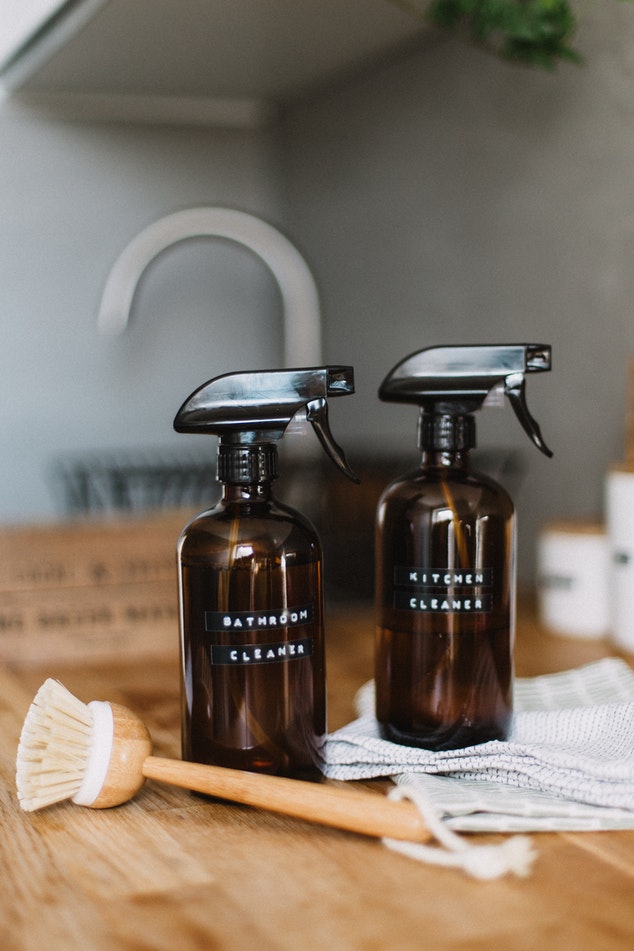
Green Cleaning Simple ingredients from your pantry can be used to make cleaning products that are kinder to the environment at a fraction of the cost. Take a look below at some of the incredible uses for vinegar, baking soda, rubbing alcohol, and ammonia. See bottom for recipes on Green Cleaners. Diluted White Vinegar Mildly acidic white vinegar dissolves dirt, soap scum and hard water deposits from smooth surfaces, yet it's gentle enough to use in solution to clean hardwood flooring. White vinegar is a natural deodorizer, absorbing odors instead of covering them up. (And no, your bathroom won't smell like a salad. Any acid aroma disappears when dry.) With no coloring agents, white vinegar won't stain grout on tiled surfaces. Because it cuts detergent residue, white vinegar also makes a great fabric softener substitute for families with sensitive skin. In the kitchen, use vinegar-and-water spray to clean countertops, lightly soiled range surfaces and backsplash areas. In the bathroom, spray countertops, floors and exterior surfaces of the toilet. For really tough bathroom surfaces such as shower walls, pump up the cleaning power by heating the solution in the microwave until barely hot. Spray shower walls generously with the warmed solution, allow to stand for 10–15 minutes, then scrub and rinse. Undiluted White Vinegar Used straight from the jug, undiluted white vinegar makes quick work of tougher cleaning problems involving hard water deposits or soap scum. Use it to clean the inside of the toilet bowl. Before you begin, dump a bucket of water into the toilet to force water out of the bowl and allow access to the sides. Pour undiluted white vinegar around the bowl and scrub with a toilet brush to remove stains and odor. Use a pumice stone to remove any remaining hard water rings. Clean showerheads that have been clogged with mineral deposits with undiluted white vinegar. Place 1/4 to 1/2 cup vinegar in a plastic food storage bag, and secure the bag over the showerhead with a rubber band. Let stand for 2 hours to overnight, then rinse, and buff the fixture. White vinegar softens clothes and cuts detergent residue. For family members with sensitive skin, add 1 cup to the laundry rinse cycle instead of commercial fabric softener. For general cleaning purposes, you can substitute lemon juice for white vinegar. Use the outer rind to polish porcelain surfaces and release fragrant lemon oil. If you have a garbage disposal unit, grind the rind in it while running cool water down the drain. The oils in the rind clean the disposal unit and sharpen the blades. Baking Soda Baking soda's mild abrasive action and natural deodorizing properties make it a powerful replacement for harsh commercial scouring powders. Sprinkle baking soda onto a damp sponge to tackle grimy bathtub rings, scour vanity units or remove food deposits from the kitchen sink. For tougher grime, make a paste of baking soda and water, apply to the tub or sink, and allow to stand for 10–20 minutes until the deposits have softened and can be removed. Keep bathroom drains running freely and smelling sweet by pouring 1/2 to 3/4 cup baking soda into the drain, and dribbling just enough hot water to wash the solution down. Let stand for 2 hours to overnight, and then flush thoroughly with hot water (do not use on blocked drains). Rubbing Alcohol Rubbing (isopropyl) alcohol provides the base for an evaporating cleaner to rival commercial window and glass cleaning solutions. Use it on windows, mirrors, chrome fixtures and for a shiny finish on hard-surface ceramic tiles. Ammonia An alkaline solution, clear ammonia creates stronger window and all-purpose cleaning recipes than acidic vinegar. Choose a non-sudsing type: Suds may look as if they're working, but they're tough to rinse and remove.   Green Cleaners Homemade cleaning products offer many advantages to cost-conscious households. Using on-hand ingredients can be far less expensive than buying commercial cleaners, won't generate discarded product packaging, and the household avoids exposure to harsh chemicals or toxic ingredients. Try these cleaning recipes as a starting point, increasing or decreasing their strength as your household's cleaning needs require. Homemade Spray Cleaner Try this recipe to harness the cleaning power of white vinegar. Mix in a spray bottle: 1 cup white vinegar 1 cup water Homemade Glass Cleaner Try this recipe to harness the cleaning power of rubbing alcohol. Mix in a spray bottle: 1 cup rubbing (isopropyl) alcohol 1 cup water 1 tablespoon white vinegar Try the following formulations for spring cleaning or tough chores. Strong Glass Cleaner Mix in a spray bottle: 1 cup rubbing (isopropyl) alcohol 1 cup water 1 tablespoon clear, non-sudsing ammonia Strong All-Purpose Cleaner Mix in a spray bottle: 1 tablespoon clear, non-sudsing ammonia 1 tablespoon clear dishwashing liquid 2 cups water

Read more